Integrating Scuba Diver Vector Clipart – 53 Designs into Your Creative Workflow
In the fast-paced world of digital design and print-on-demand commerce, asset management is often the bottleneck that slows down production. Designers, entrepreneurs, and content creators frequently find themselves searching for high-quality visual elements that are not only aesthetically pleasing but also technically versatile. This is where a comprehensive collection like Scuba Diver Vector Clipart – 53 Designs becomes more than just a purchase; it becomes a foundational component of an efficient creative pipeline. Understanding how to integrate these assets into your existing workflows can significantly reduce turnaround time for projects ranging from custom merchandise to educational materials.
The value of this specific collection lies in its dual nature: it offers artistic depth through detailed black-and-white line art while providing the technical flexibility required for modern manufacturing processes. Whether you are a small business owner launching a summer-themed apparel line or an educator creating marine biology worksheets, the utility of these files depends on how well they fit into your preparation and execution phases. By treating these clipart designs as modular components rather than static images, you can streamline your design process and maintain consistency across various outputs.
Pre-Production Planning and Asset Organization
Before diving into the actual design work, effective preparation is crucial. When you acquire a digital download such as this, the first step in your workflow should be systematic organization. The package includes SVG, PNG, and PDF formats, each serving a distinct purpose in the production chain. Ignoring these distinctions can lead to inefficiencies later in the process.
Start by unzipping the downloaded file into a dedicated project folder. It is advisable to create subfolders for each format—SVG for vector-based editing, PNG for raster-based layering, and PDF for direct printing or client proofs. This structure ensures that when you are in the midst of a tight deadline, you do not waste time converting files or searching for the correct resolution. The 300 DPI resolution mentioned in the product details is critical for print quality, so ensuring your PNGs are stored correctly prevents accidental upscaling of lower-resolution proxies.
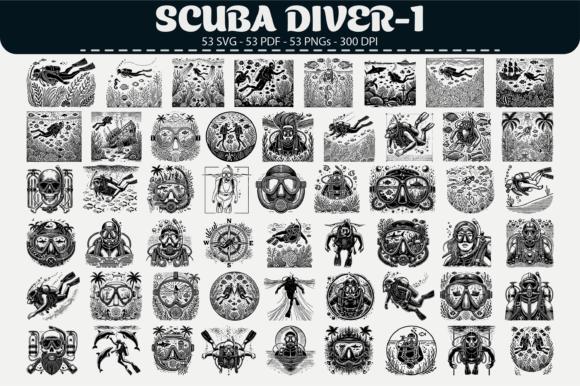
Furthermore, reviewing the 53 designs beforehand allows you to categorize them by theme. You might group illustrations featuring scuba divers and oxygen tanks separately from those depicting marine life like dolphins and coral reefs. This thematic sorting helps in rapid retrieval during the creative phase. If you are working on a series of products, such as a cohesive line of tote bags and mugs, having pre-sorted assets enables you to maintain a consistent visual narrative without redundant searching.
Technical Compatibility and Tool Integration
The versatility of Scuba Diver Vector Clipart – 53 Designs is largely defined by its file formats. Understanding how these formats interact with your preferred software tools is essential for seamless implementation. SVG files are scalable vector graphics, meaning they can be resized infinitely without losing quality. This makes them ideal for use with cutting machines like Cricut or Silhouette, which are staples in the print-on-demand and crafting industries. When importing SVGs into design software such as Adobe Illustrator, CorelDRAW, or Inkscape, you retain the ability to edit individual paths. This allows for customization, such as thickening lines for better visibility on fabric or simplifying complex details for vinyl cutting.
On the other hand, PNG files with transparent backgrounds are indispensable for digital compositing. If you are designing a t-shirt mockup or a social media graphic, PNGs allow you to layer the scuba diver illustrations over textured backgrounds or photographic elements without cumbersome background removal tasks. This saves significant time during the execution phase. For users who prefer word processors or simpler layout tools, the included PDF files offer a high-quality printable format that preserves the integrity of the line art, making them suitable for immediate use in documents, invitations, or educational handouts.
It is also important to consider color modes. Since these are black-and-white vector-style illustrations, they are inherently compatible with single-color printing methods such as screen printing or laser engraving. However, if your workflow involves full-color sublimation printing, you can easily recolor the SVG elements within your design software. This adaptability ensures that the assets remain useful regardless of changes in your production method or client requirements.
Application in Print-on-Demand and Product Creation
For entrepreneurs and small business owners, the primary application of these designs is likely in the creation of physical products. The nautical and underwater themes are perennial favorites in the leisure and travel markets. When integrating these clips into your product lineup, consider the end-user experience. For instance, intricate details in the underwater landscapes or shipwreck illustrations may look stunning on large posters but could become lost on smaller items like stickers or keychains. Adjusting the scale and complexity of the design based on the product surface is a key quality control step.
When preparing files for print-on-demand platforms, ensure that your final export meets the specific DPI and dimension requirements of the provider. While the source files are high-quality, improper resizing during the design phase can compromise output clarity. Use the SVGs to create your master design, then export the final artwork at the required size and resolution. This approach leverages the scalability of vectors to ensure crisp edges and professional-quality output, whether the item is a mug, a tote bag, or a wall art print.
Additionally, these designs can be combined with typography to create unique branding elements. The clean, modern style of the line art complements both serif and sans-serif fonts, allowing for versatile typographic pairings. Experimenting with layout compositions—such as placing a diver illustration alongside a bold headline—can help you develop a distinctive brand aesthetic that stands out in crowded marketplaces.
Educational and Digital Content Utilization
Beyond commercial products, these illustrations serve valuable roles in educational and digital contexts. Educators and publishers can utilize the sea creatures and nautical symbols to create engaging learning materials. The black-and-white format is particularly suited for coloring books or activity sheets, encouraging interactive learning. When preparing these materials, the PDF format offers a straightforward solution for distribution, ensuring that the printed pages retain their sharpness.
For digital marketers and bloggers, the PNG files provide ready-to-use assets for website headers, blog post featured images, or social media content. The transparent background facilitates easy integration into existing brand templates. By incorporating these underwater themes, you can visually reinforce content related to travel, environmental conservation, or ocean science. Consistency in visual style across your digital presence helps build brand recognition and enhances user engagement.
Long-Term Value and Workflow Efficiency
Investing in a diverse set of assets like Scuba Diver Vector Clipart – 53 Designs pays dividends over time. Rather than sourcing individual images for each project, having a centralized library of cohesive designs reduces decision fatigue and accelerates the initial stages of design. This efficiency allows you to focus more on strategic aspects of your projects, such as marketing and customer engagement, rather than getting bogged down in asset hunting.
Maintaining a well-organized digital library also supports scalability. As your business or creative endeavors grow, you can quickly repurpose these designs for new campaigns or product lines. The ability to mix and match elements—combining a diver with different marine backgrounds, for example—extends the usability of the pack far beyond its original 53 designs. This modularity is a hallmark of effective resource management in creative workflows.
Ultimately, the successful integration of these clipart designs depends on a clear understanding of your tools, goals, and audience. By approaching the acquisition and use of these assets with a process-oriented mindset, you transform simple digital files into powerful components of your creative infrastructure. Whether you are cutting vinyl for a local craft fair or designing a global e-commerce store, the right preparation and technical application ensure that your final products meet professional standards and resonate with your target market.