Amsterdam Canal Houses: A Creative Design Asset
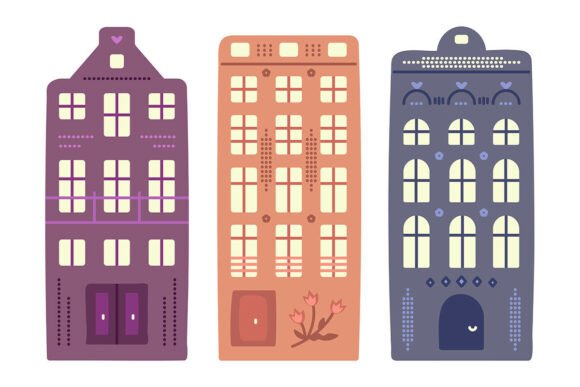
Visual storytelling relies heavily on the ability to evoke a specific mood or place instantly. When designers, marketers, and content creators need to convey the charm of European travel without relying on generic stock photography, stylized illustrations offer a powerful alternative. The Three Canal Houses in Amsterdam Style represents more than just a decorative element; it is a versatile tool for communicating warmth, heritage, and urban creativity. This colorful vector illustration showcases a set of three charming Amsterdam-style canal houses, drawn in a playful, preppy doodle style. With warm tones and stylized details, it serves as a creative interpretation of Dutch architecture that resonates with modern audiences seeking authenticity mixed with approachability.
Enhancing Brand Identity Through Stylized Architecture
For small business owners and entrepreneurs, particularly those in the hospitality, travel, or lifestyle sectors, visual consistency is paramount. Using a distinct illustration style helps differentiate a brand from competitors who may rely on overused photographic assets. The Three Canal Houses in Amsterdam Style offers a unique aesthetic that balances professional polish with hand-drawn charm. This "preppy doodle" approach suggests accessibility and friendliness, which can be crucial for brands aiming to appear welcoming rather than corporate or distant.
Consider a boutique travel agency specializing in European city breaks. Instead of using a high-resolution photo of a crowded Dam Square, which might feel impersonal, incorporating this vector illustration into their email newsletters or social media graphics creates a cohesive narrative. The warm tones invoke a sense of comfort and nostalgia, encouraging potential clients to imagine themselves in a cozy café along the canal. By integrating these stylized details into their visual identity, businesses can strengthen communication and build an emotional connection with their audience before a single word of copy is read.
Practical Applications in Digital and Print Media
The versatility of vector graphics lies in their scalability and adaptability across various mediums. Because the Three Canal Houses in Amsterdam Style is designed as a vector illustration, it maintains crisp edges and vibrant colors whether scaled down for a mobile app icon or enlarged for a large-format print. This flexibility saves time and resources for designers who would otherwise need to create multiple versions of an asset for different platforms.
- Digital Marketing: Use the illustration as a header image for blog posts about Dutch culture, travel tips, or architectural history. The white background ensures easy integration into website layouts without complex masking or editing.
- Social Media Content: Create engaging Instagram stories or Pinterest pins by overlaying text on the clean spaces around the houses. The playful style performs well on platforms where users scroll quickly, as it catches the eye without appearing cluttered.
- Print Materials: The design is perfect for postcards, stickers, and decorative urban projects. For educators or publishers, these images can serve as engaging visuals in textbooks or children’s books about geography and world cultures.
Freelancers and graphic designers will appreciate how this asset simplifies decision-making during the creative process. Rather than spending hours sketching original concepts for a client project with a Dutch theme, they can utilize this high-quality illustration as a foundational element. This efficiency allows professionals to focus on other aspects of the project, such as typography and layout, ultimately improving presentation quality and meeting deadlines more effectively.
Supporting Creativity in Educational and Editorial Contexts
Educators and content creators often struggle to find visuals that are both accurate enough to be informative and engaging enough to hold attention. The Three Canal Houses in Amsterdam Style bridges this gap by offering a recognizable yet stylized representation of iconic architecture. While it is not a technical blueprint, its stylized details capture the essence of the gabled roofs and narrow facades characteristic of Amsterdam’s canal ring.
In an educational setting, this illustration can support lessons on European history, urban planning, or art history. Teachers can use it to spark discussions about why houses were built so narrowly (due to tax laws based on frontage width) or how the architecture reflects the city’s mercantile past. The playful nature of the doodle style makes the subject matter less intimidating for younger students or casual learners, thereby supporting goals related to engagement and knowledge retention.
Similarly, bloggers and journalists covering travel trends can use this image to break up text-heavy articles. A well-placed illustration provides visual relief and reinforces the article’s theme. For instance, a piece on "The Best Coffee Shops in Amsterdam" gains immediate contextual relevance when accompanied by this charming architectural motif. It signals to the reader that the content is curated with care and attention to aesthetic detail.
Considerations for Effective Implementation
While the Three Canal Houses in Amsterdam Style offers numerous benefits, it is essential to consider fit and context to maximize its impact. This illustration is best suited for projects that benefit from a lighthearted, approachable tone. It may not be appropriate for formal legal documents, serious financial reports, or contexts requiring photorealistic accuracy. Users should evaluate whether the "preppy doodle" style aligns with their overall brand voice. If a brand positions itself as ultra-luxurious or strictly minimalist, this colorful and detailed style might clash with existing visual guidelines.
Additionally, because the illustration features warm tones, it pairs best with complementary color palettes. Designers should experiment with contrasting backgrounds or accent colors to ensure the houses stand out. Although the white background provides flexibility, placing the illustration on a busy pattern might reduce its visibility. Testing the asset in situ before finalizing designs is a recommended practice to ensure optimal visual hierarchy.
Another consideration is cultural sensitivity and accuracy. While this is a creative interpretation rather than a historical document, users should be mindful of how they contextualize the image. Avoid using it in ways that perpetuate stereotypes or misrepresent Dutch culture. Instead, use it as a starting point for authentic storytelling that respects the heritage of the architecture depicted.
Maximizing Value for Creators and Businesses
Ultimately, the value of the Three Canal Houses in Amsterdam Style lies in its ability to solve common design problems efficiently. It provides a ready-made solution for anyone needing to evoke the spirit of Amsterdam without the logistical challenges of custom illustration or the licensing complexities of photography. For marketers, it enhances campaign coherence; for educators, it aids visualization; and for hobbyists, it inspires creative projects.
By integrating this asset into their workflow, professionals can achieve higher quality outputs with less effort. The key is to view the illustration not just as a picture, but as a communication tool. Whether used on a sticker to promote a local event or in a digital ad to drive travel bookings, its charm and clarity help convey messages more effectively. As visual content continues to dominate digital interactions, having access to distinctive, high-quality illustrations like this becomes a strategic advantage for anyone looking to stand out in a crowded marketplace.
In conclusion, the Three Canal Houses in Amsterdam Style is a practical, versatile, and aesthetically pleasing resource. Its playful yet professional design makes it suitable for a wide range of applications, from commercial branding to educational materials. By understanding its strengths and limitations, users can leverage this illustration to enhance their creative projects, save time, and connect more meaningfully with their audiences.